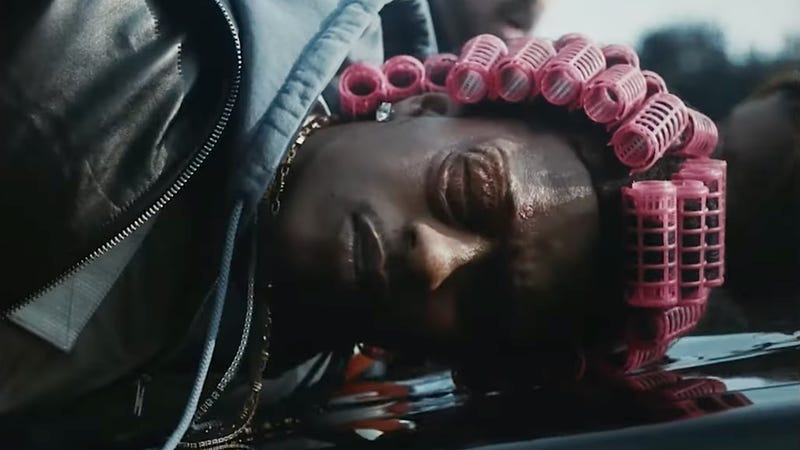
A$AP Rocky Drops an Unconventional Visual Featuring Winona Ryder
gang-flow – The Harlem-born artist presents an unconventional visual experience featuring Winona Ryder, A$AP Rocky has released a new visual project that immediately stands apart from conventional music video formatsblending music, cinema, and visual art into a single narrative-driven work. From its first frames, the release signals that this is not a standard promotional clip, but a carefully constructed artistic statement designed to provoke interpretation and discussion.
The visual opens without spectacle or excess. Instead of fast cuts and performance-heavy scenes, A$AP Rocky opts for restraint and atmosphere. The introduction and lead merge naturally, placing the audience directly into a slow-moving narrative world. This approach aligns with straight news storytelling, delivering the core fact immediately: A$AP Rocky has dropped a new visual, and it deliberately breaks away from familiar industry formulas.
By avoiding predictable structures, A$AP Rocky positions the project as a standalone visual work rather than a simple extension of a song. The choice reflects a broader shift in how major artists communicate identity and intent through visuals.
Winona Ryder plays a pivotal role in the visual, not as a cameo, but as a narrative anchor. Her presence brings emotional weight and cultural memory that transcends music audiences. Known for portraying layered, introspective characters, Ryder’s performance relies on subtle expressions and controlled movement rather than dialogue.
A$AP Rocky appears to give Ryder full creative space within the frame. The camera lingers, allowing her character to communicate through silence and gesture. This dynamic reinforces the visual’s cinematic tone and elevates it beyond traditional music video storytelling.
The project borrows heavily from arthouse cinema. Lighting is muted, color palettes are restrained, and pacing is intentionally slow. Rather than matching visual cuts to musical beats, A$AP Rocky allows scenes to unfold organically. This decision challenges audience expectations and encourages closer viewing.
There is no explicit storyline presented. Instead, the visual relies on suggestion, symbolism, and mood. This open-ended structure invites viewers to form their own interpretations, a strategy increasingly common in high-concept visual releases but still rare in mainstream hip-hop.
In recent years, A$AP Rocky has consistently positioned himself as more than a recording artist. His involvement in fashion, visual art, and film has shaped a public image rooted in multidisciplinary creativity. This release reinforces that trajectory.
By collaborating with Winona Ryder, A$AP Rocky bridges generational and cultural spaces. The pairing feels intentional, aligning two figures known for rejecting creative limitations. The result is a visual that speaks to music fans, film enthusiasts, and art-focused audiences simultaneously.
Initial responses to the visual have been mixed but engaged. Some viewers praise its ambition and cinematic quality, while others question its accessibility. However, the level of discussion surrounding the release indicates its impact. A$AP Rocky appears comfortable with polarizing reactions, using them as part of the project’s cultural footprint.
In an era dominated by short-form, fast-consumption content, this visual resists instant gratification. Its slower pace and abstract structure encourage repeat viewing and deeper analysis, extending its relevance beyond a typical release cycle.
Cross-disciplinary collaborations are becoming increasingly common in global entertainment. Musicians are now expected to deliver immersive visual worlds alongside their music. A$AP Rocky embraces this expectation while pushing it further, prioritizing mood and narrative over commercial clarity.
The inclusion of Winona Ryder reflects a broader trend of blending legacy cultural figures with modern music projects. This approach creates layered meaning and broadens audience reach without relying on nostalgia alone.
Viewed within his broader career, this visual represents a continuation of A$AP Rocky’s evolution rather than a departure. From earlier experimental visuals to fashion-forward performances, he has consistently challenged genre boundaries. This release sharpens that focus, emphasizing visual storytelling as a core component of his artistic output.
For long-time followers, the project feels like a natural progression. For new audiences, it serves as an entry point into understanding A$AP Rocky as a curator of culture rather than solely a performer.
The visual sets a potential benchmark for future releases within hip-hop and beyond. By prioritizing narrative depth and cinematic language, A$AP Rocky demonstrates how music visuals can function as independent artistic works.
Emerging artists may view this project as evidence that audiences are willing to engage with slower, more abstract content when it is executed with clarity and intention. The collaboration with Winona Ryder further underscores the value of thoughtful casting over headline-driven appearances.
Beyond its initial release, the visual offers long-term relevance. Its themes, aesthetic choices, and collaborative nature make it suitable for extended analysis across multiple platforms. Discussions around visual symbolism, performance, and cross-medium collaboration ensure that the project remains evergreen.
For content creators and cultural commentators, the release provides numerous angles for derivative discussion, from cinematic breakdowns to broader commentary on the evolution of music visuals in the digital age.
With this unconventional release, A$AP Rocky reinforces his role as an artist willing to take calculated creative risks. The decision to center the visual around mood, symbolism, and a powerful performance by Winona Ryder reflects a commitment to artistic integrity over mass appeal. The project stands as a clear example of how modern music visuals can operate as serious cultural artifacts, shaping conversation rather than merely supporting a track.
This website uses cookies.

