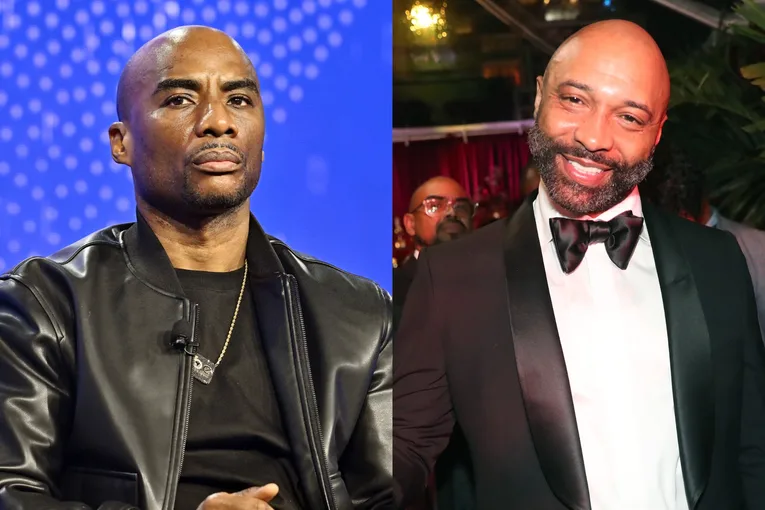
Joe Budden Suggests He’s Ready to Reconnect With Charlamagne Tha God
gang-flow – indicating that he may be open to re-establishing communication with Charlamagne Tha God after years of public tension. The statement, Joe Budden has signaled a possible shift in a long-running media rivalry,delivered during recent commentary, immediately drew attention from hip-hop media observers and podcast audiences who have followed the fractured relationship between the two influential figures.
The remark did not include a formal invitation or timeline, but it marked a notable change in tone from past exchanges that were often defined by criticism and distance. For listeners familiar with the history, the development suggests a willingness to revisit unresolved issues rather than prolong a stalemate.
The relationship between Joe Budden and Charlamagne Tha God has been shaped by parallel careers in music, radio, and podcasting, with both becoming prominent voices in hip-hop commentary. Their professional paths crossed frequently during earlier phases of their media rise, creating mutual visibility as well as competition.
Over time, disagreements and public commentary created a rift that became part of the broader hip-hop media narrative. The dispute was not tied to a single incident but developed through repeated critiques and perceived slights, amplified by social media and on-air discussion. As each built separate platforms, the lack of communication became an accepted reality within the industry.
The recent suggestion of reconnecting came during reflective commentary that emphasized growth and perspective rather than conflict. Joe Budden framed the idea as an openness to dialogue, not a definitive reconciliation, underscoring that maturity and experience can reshape earlier positions.
Industry analysts note that this type of statement often reflects a recalibration of priorities. With podcasting and digital media increasingly driven by collaboration and cross-audience engagement, long-standing feuds can become less valuable than mutual understanding. The comment did not assign blame or revisit past arguments, which further distinguished it from earlier rhetoric.
Joe Budden made the remarks without advance promotion, lending them a spontaneous quality that resonated with listeners. The absence of dramatic framing reduced speculation about publicity motives and instead positioned the moment as candid reflection.
Reaction online was swift but measured. Fans discussed the possibility of renewed dialogue while acknowledging that reconciliation requires consent from both sides. Charlamagne Tha God has not publicly responded, leaving the situation open-ended. Media commentators emphasized that acknowledgment alone does not equate to resolution, but it does alter the public narrative.
If communication were to resume, the impact would extend beyond personal matters. Joe Budden occupies a central role in podcast culture, and any interaction with Charlamagne Tha God would draw attention across multiple platforms. Observers suggest that even limited collaboration could influence discourse around media accountability, creative rivalry, and professional longevity.
The hip-hop media ecosystem has evolved toward long-form discussion and audience trust. Reconciliation stories often perform strongly because they mirror broader themes of growth and conflict management. From a business standpoint, renewed dialogue could benefit both parties without requiring formal partnerships.
Joe Budden has built a reputation for directness and strong opinions, traits that fuel both loyalty and controversy. Expressing openness to reconnect positions him as reflective rather than confrontational, a subtle but meaningful shift for audience perception.
Such moments can recalibrate how a figure is viewed within a maturing media landscape. Rather than erasing past conflicts, acknowledging them and signaling readiness for dialogue can reinforce credibility. For listeners, the message suggests that professional evolution does not require abandoning authenticity.
Whether the suggestion leads to direct communication remains uncertain. What is clear is that Joe Budden has introduced a new tone into a narrative that had long seemed static. The gesture alone reframes the story from unresolved rivalry to potential conversation.
As hip-hop media continues to professionalize, moments like this highlight how personal history intersects with public platforms. The next steps, if any, will determine whether the shift becomes a footnote or the beginning of a broader recalibration in media relationships.
This website uses cookies.

