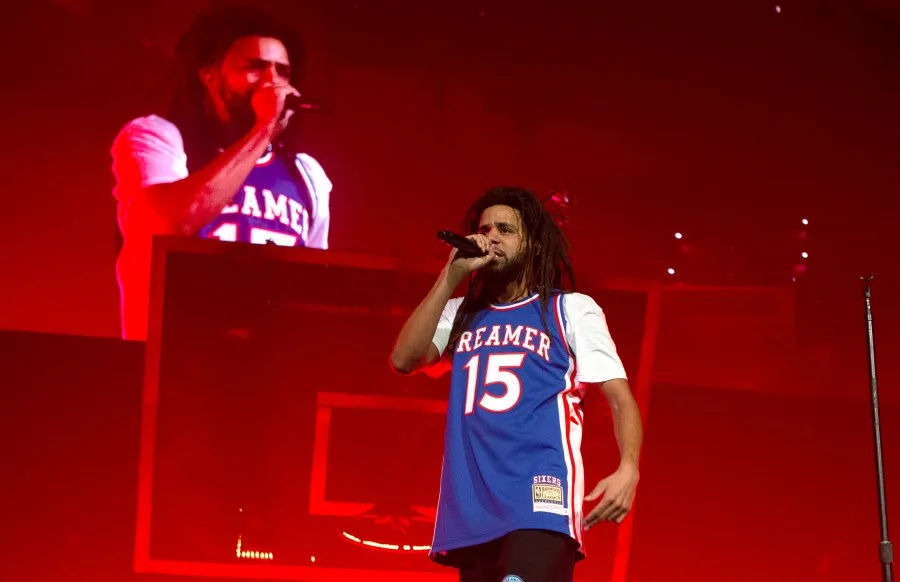
J. Cole Signals New Chapter with Album Launch Date and Visual Tease
gang-flow – J. Cole has officially set the timeline for his long-anticipated next project, signaling a decisive new phase in his career by confirming the album’s release date alongside a first visual reveal. The announcement, shared directly through his official channels, immediately drew global attention, positioning the album release as one of the most closely watched moments in contemporary hip-hop.
The update arrived without extended buildup. Instead, it followed a newsroom-style approach: a clear date, a striking piece of artwork, J. Cole and no accompanying explanation. That restraint has fueled conversation, with fans and industry observers interpreting the move as a confident statement rather than a marketing tease. In a crowded release calendar, the album release now stands as a fixed point that reshapes expectations for the months ahead.
The confirmation of the album release ends months of speculation that had circulated across music forums and social platforms. By locking in a date, J. Cole effectively shifted the discussion from when the project might arrive to what it represents. The clarity of the announcement contrasts with the artist’s historically minimal approach to promotion, reinforcing the idea that the music itself will carry the narrative.
Industry analysts note that the album release timing aligns with a period when major artists typically avoid overlapping drops, suggesting strategic confidence. Rather than competing for attention, the date positions the project to dominate discussion cycles on its own terms.
Alongside the date, J. Cole revealed a piece of artwork that immediately sparked analysis. The visual is sparse, controlled, and deliberately ambiguous. There are no obvious references to past albums, no overt symbolism spelled out for easy consumption. This approach frames the album release as a transition rather than a continuation.
Design choices in the artwork hint at themes of closure, reflection, and evolution. For long-time listeners, the image reads as a signal that the forthcoming album release may serve as a summative statement, revisiting ideas explored throughout his catalog while pointing toward a definitive next step.
J. Cole’s career has been defined by intentional pacing. Each album release has arrived with a clear thematic focus, often responding to personal milestones or broader cultural conversations. This latest announcement fits that pattern but carries added weight because of how long the project has been anticipated.
Over the years, references to the album release appeared in lyrics, interviews, and live performances, building an extended narrative arc. By finally setting the date, J. Cole closed that loop, transforming a long-running idea into an imminent reality.
Within hours of the announcement, streaming platforms, music media outlets, and chart analysts began recalibrating forecasts. The album release is expected to influence release schedules from other artists, a common ripple effect when a high-profile figure confirms a drop.
Record executives and independent artists alike pay attention to such moments, as they often reset the competitive landscape. Even without a single track preview, the album release announcement alone generated measurable spikes in online engagement, search interest, and playlist speculation.
Fan communities responded with a mix of excitement and scrutiny. Discussion threads dissected every detail of the artwork, while others focused on the implications of the album release date itself. Some interpreted the timing as symbolic, while others connected it to prior lyrical hints.
What stands out is the absence of confusion. The message was direct, and the audience responded accordingly. In an era of overexplained rollouts, the simplicity of the album release announcement appears to have strengthened its impact rather than diluted it.
Notably, J. Cole did not accompany the announcement with a statement, interview, or caption explaining the project. That silence functions as part of the strategy. By withholding commentary, he allows the album release to define itself through anticipation rather than exposition.
Media strategists point out that this approach reduces the risk of misinterpretation before listeners hear the music. It also ensures that early narratives remain open-ended, encouraging deeper engagement once the album release actually occurs.
The forthcoming album release arrives at a time when hip-hop is experiencing rapid stylistic shifts. New voices dominate streaming charts, while veteran artists reassess their place in a changing ecosystem. J. Cole’s decision to move forward now suggests confidence in the relevance of his perspective.
Rather than adapting to trends, the album release appears positioned to reassert a core identity centered on lyricism, structure, and thematic cohesion. That positioning could influence broader conversations about longevity and artistic purpose in the genre.
Unlike many modern rollouts, there were no claims about chart dominance, cultural impact, or legacy. The album release was presented as a fact, not a prediction. This restraint lowers the risk of inflated expectations while maintaining high interest.
For listeners, that balance creates space for discovery. The absence of predefined narratives allows the album release to be evaluated on its own terms once the music is available.
By confirming the album release date and sharing a visual cue, J. Cole effectively reset the narrative around his next chapter. The move suggests a closing of one era and the opening of another, without explicitly framing it as a final statement.
As the release date approaches, additional details may emerge, but the core message is already established. The album release is no longer theoretical. It is scheduled, visualized, and publicly owned by the artist.
This announcement does more than add another entry to the release calendar. It reframes how audiences discuss J. Cole’s trajectory, shifting from speculation to anticipation. The album release now functions as a focal point for conversations about artistic evolution, control, and timing in modern music.
This website uses cookies.

