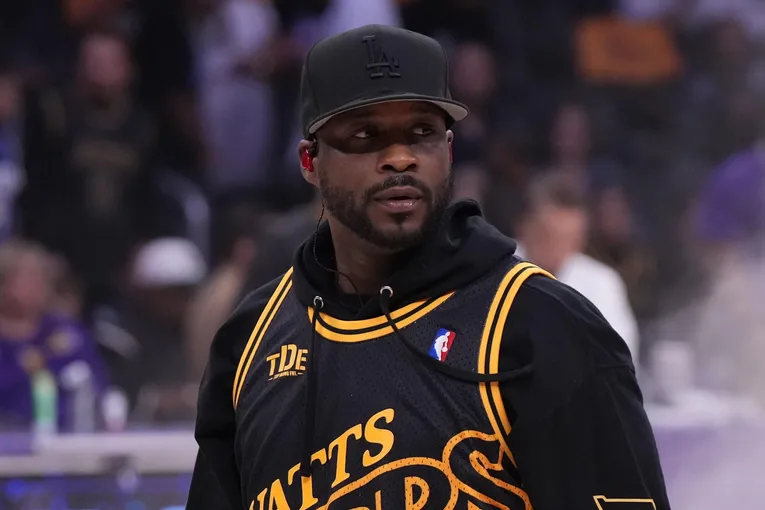
Jay Rock Hints at His Position After The Game Brings Up Kendrick Lamar
gang-flow – The timing mattered because it followed The Game’s renewed comments about Kendrick Lamar. Instead of writing a long statement, Jay Rock signaled his stance with a subtle response that many fans read as dismissal.Jay Rock sparked fresh talk online after a short post spread across hip-hop pages.
That small moment fits a common media pattern. First, one interview clip gets clipped and shared. Then, a quick reaction shifts the angle. As a result, people debate tone and “credit” as much as facts.
The Game recently revisited a story about Kendrick’s early career. He suggested he tried to bring Kendrick into his camp before Kendrick’s wider breakout. Because the topic touches legacy, the clip traveled fast.
Soon, posts reframed it as a major “what-if” for West Coast rap. In turn, readers asked direct questions: what year, what connection, and what proof. Those questions pushed the story forward.
Hip-hop fans track origin stories closely. Therefore, even a casual memory can sound like a claim to influence. At the same time, platforms reward simple narratives. A clean caption spreads faster than a careful timeline.
Because of that, “almost signed” stories tend to blow up. However, viral does not mean verified. It often means the clip was easy to share.
Jay Rock sits close to the TDE era and Kendrick’s rise. That context makes his public posts feel meaningful. In other words, even a short post can look like a credibility check.
Indirect messaging also helps artists avoid long public fights. Instead of debating line by line, they can show distance with one post. That is why a subtle response can become a headline without any new facts.
Reports described Jay Rock’s post as brief and sarcastic. He did not share dates, details, or documents. Still, the tone read as dismissive to many listeners.
Because the post stayed vague, readers filled the gap with interpretation. Some took it as support for pushback from Kendrick’s circle. Others saw it as Jay Rock mocking the internet’s obsession with “who did what first.” Either way, the subtle response helped keep the topic trending.
Online debates often follow the same steps. First, the clip spreads. Next, commentary adds context. After that, reactions from connected figures take over the feed.
That shift matters. Once reactions dominate, the story becomes less about the original claim. Instead, it becomes about who seems to reject it and how strongly. Consequently, a subtle response can steer the news cycle more than a longer explanation.
A few points are easy to state. The Game made the claim in public. The clip circulated widely. Jay Rock posted a reaction that fans treated as a stance.
However, a reaction is not proof. It does not confirm an offer, a meeting, or a serious negotiation. It also does not prove that no contact happened. For that reason, readers should separate three layers:
The claim: what was said in the interview
The reaction: what others posted, including the subtle response
The proof: anything that can be checked, such as dates and first-hand details
This split helps keep the conversation grounded.
A simple checklist can help:
Watch the full clip, not just a short edit.
Treat “I heard” as weaker than “I saw.”
Look for time markers, not just strong opinions.
Remember that tone is not evidence.
Wait for follow-ups that add details.
With this approach, the story stays clearer. In addition, it reduces the chance you share a wrong version.
This type of dispute returns often in music culture. A veteran shares an old story. Fans debate credit and timelines. Then, social posts amplify the conflict.
That pattern supports cluster content without needing daily updates. For example, you can break it into topics like narrative control, media literacy, and how artists use indirect posts. In that structure, the subtle response becomes a case study, not just gossip.
Three outcomes usually follow. One, The Game may repeat or expand the story in another interview. Two, someone closer to Kendrick may respond with clearer details. Three, the debate may cool down until another clip resurfaces.
Until then, the main lesson is simple: modern music news often runs on signals. In that environment, the subtle response works like shorthand, and the internet treats it as a key plot point.
This website uses cookies.

