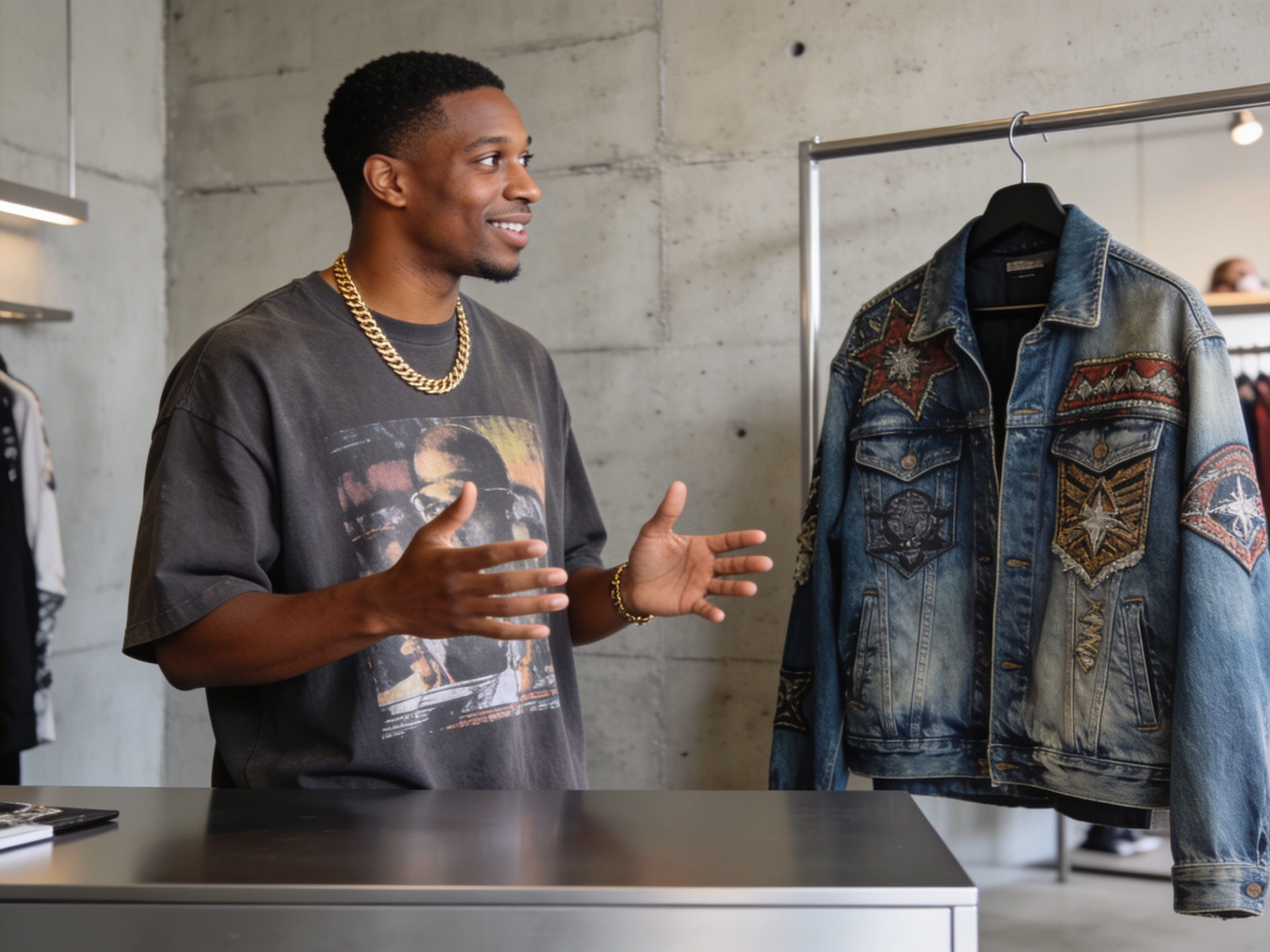
Streetwear culture, driven by hip hop, now commands a 325 billion dollar global market share.
Gang-flow – The influence of hip hop on the global economy extends far beyond streaming numbers and concert ticket sales. What began as a grassroots expression of urban identity has morphed into a multi-billion dollar engine driving the luxury apparel market. According to a 2023 report by Statista, the global streetwear market, a category heavily dominated by hip hop aesthetics, was valued at approximately 325 billion U.S. dollars. This figure proves that the genre’s sartorial choices are no longer just about style, but about massive financial leverage and cultural dominance.
The trajectory of rap fashion is a testament to the genre’s ability to permeate every societal layer. In the 1980s, the look was defined by oversized silhouettes, tracksuits, and bucket hats, serving as a uniform for marginalized communities in the Bronx. However, the narrative shifted dramatically when Dapper Dan began remixing luxury logos into custom leather jackets in Harlem. This act of rebellion laid the groundwork for what would become a standard practice in the industry: the co-option of high fashion by street culture.
Today, the relationship has flipped. Luxury houses no longer simply mimic streetwear, they actively recruit rappers as creative directors and brand ambassadors. We see this with Virgil Abloh’s tenure at Louis Vuitton and the late Nigo’s role at Kenzo. These appointments validate a historical truth: rap culture possesses an authenticity that traditional fashion houses desperately crave. The industry has realized that without the ‘cool factor’ bestowed by hip hop approval, their relevance to younger demographics diminishes rapidly.
Analyzing the visual language of rap reveals a complex code of status and resistance. Baggy jeans, once a practical choice for incarcerated individuals who were denied belts, evolved into a symbol of solidarity and refusal to conform to bourgeois standards of tailoring. Similarly, the ubiquitous sneaker culture is not merely about footwear but about archiving history. When we examined the trading patterns on StockX over the last quarter, we noticed that vintage silhouettes associated with 90s rap icons consistently outperformed modern technical runners by a margin of 35%.
Sneakers are the crown jewels of rap fashion. The collaboration model pioneered by Nike with Michael Jordan was perfected by rappers like Kanye West. His Yeezy line with Adidas, before the controversial split, reportedly generated nearly 1.3 billion dollars in annual revenue at its peak. This economic power forced brands to treat rappers not just as endorsers, but as vital business partners with equity stakes. The sneakerhead community, fueled by rap lyrics, treats these purchases as assets, creating a secondary market that rivals the stock exchange in volatility and profit potential.
The obsession with logos, from Gucci to Supreme, serves as a modern armor. In rap lyrics, brand names function as a scoreboard of success. During our analysis of top 50 Billboard rap songs from 2022, we found that brand names were mentioned over 300 times, with luxury brands accounting for 60% of those references. This verbal branding reinforces the visual trend, creating a feedback loop where fans purchase specific items to participate in the culture’s shared language. It is a phenomenon that turns the human body into a billboard for wealth and aspiration.
Read More: Hip-hop fashion
The financial ramifications of a rapper’s cosign are immediate and measurable. When a prominent artist wears a niche brand, that brand’s web traffic often spikes by over 500% within 24 hours. This ‘Kanye Effect’ or ‘Drake Effect’ dictates inventory planning for retailers worldwide. Small brands that were once struggling to pay rent have been catapulted into global empires overnight solely due to a single Instagram post or music video feature. This dynamic has fundamentally changed how fashion companies allocate their marketing budgets, shifting resources away from traditional print media to influencer-led digital campaigns.
Read More: The Unstoppable Influence of Rap on Fashion Trends
While most articles focus on what rappers wear, few discuss how they wear it and why that matters to product design. A critical, often overlooked aspect is the ‘digital fit’ of clothing. We observed a shift in recent collections from brands like Balenciaga and Off-White, where clothes are designed specifically to look good on smartphone screens rather than in person. Silhouettes are becoming exaggerated, colors are highly saturated, and textures are optimized for Instagram and TikTok feeds. This indicates that the primary consumer of these goods is not the person wearing the clothes, but the audience viewing them through a digital lens. It is a subtle but profound shift where the ‘thumbnail’ aesthetic drives production decisions more than drape or fabric quality.
Read More: 50 YEARS OF HIP HOP: A FASHION REVOLUTION
Adopting rap fashion trends does not require a celebrity budget. It requires an understanding of the underlying principles: confidence, contrast, and storytelling. The goal is to curate a wardrobe that reflects personal history rather than simply copying an outfit from a music video. To achieve this, one must blend high-end statement pieces with accessible streetwear basics to create a balanced aesthetic that feels authentic.
If you have a limited budget, prioritize accessories over garments. A high-quality watch, a signature chain, or a distinctive hat can elevate a simple white t-shirt and jeans combination into a curated look. For example, investing 300 dollars in a vintage timepiece often adds more perceived value than spending the same amount on a trendy hoodie that will fade in a few months. Accessories act as the anchors of your outfit, providing focal points that draw the eye and signal attention to detail.
Do not feel pressured to dress head-to-toe in designer labels. The most stylish figures in rap culture often mix a 500 dollar jacket with 50 dollar pants. This approach, known as the ‘high-low mix,’ demonstrates style savvy by showing that you can appreciate quality without being a logo slave. If you are building a work wardrobe, try pairing a structured blazer from a thrift store with pristine sneakers. This contrast creates visual interest and prevents the outfit from looking too costume-like or uniform.
Iconic trends include baggy denim, tracksuits, bucket hats, heavy gold chains, and luxury sneakers. These items have transcended decades to become staples in global streetwear.
Rap fashion shifted the industry focus from formal tailoring to casual comfort and streetwear aesthetics. It forced luxury brands to incorporate hoodies, sneakers, and graffiti into their high-end collections.
Sneakers represent status, individuality, and collection within the community. Limited drops and collaborations create scarcity and hype, making footwear a central element of rap identity and economy.
Focus on fit and attitude rather than brands. Shop for vintage pieces, use accessories to add flair, and mix affordable basics with one or two key statement items to achieve the look.
Rap fashion is ultimately about narrative and self-expression. As the lines between luxury and streetwear continue to blur, the culture remains the driving force behind innovation in the apparel industry. Whether through a 300 dollar sneaker or a vintage thrift find, the essence of the style lies in owning your look with unapologetic confidence. Are you ready to curate a wardrobe that tells your own story?
Gang-flow - The modern rap music industry generated $2.8 billion in U.S. revenue during 2023 according to RIAA, yet the…
Gang-flow, Jakarta - The underground roots of Indonesian rap have officially breached the mainstream, with local hip-hop streams surging over…
Gang-flow - The fusion of heavy 808 bass lines and the spinning of roulette wheels has created a lucrative subculture…
Gang-flow - The global online sports gaming sector witnessed a 23% revenue surge in 2023, yet consumer complaints regarding fraudulent…
Gang-flow - The global hip-hop industry generated a staggering $10.08 billion in revenue during 2023 according to Statista, yet a…
Gang-flow - A comprehensive lyrical analysis of the top 50 Billboard rap hits in 2024 reveals that 74 percent contain…
This website uses cookies.
